Thursday, 14 September 2023

Critical Appreciation Of "The Lottery Ticket" By Anton Pavlovich Chekhov

CRITICAL APPRECIATION OF "THE LOTTERY TICKET" BY ANTON CHEKHOV
 Critical appreciation of Anton Chekhov's "The Lottery Ticket"

1. **Introduction**
   - "The Lottery Ticket" is a short story written by the renowned Russian author Anton Chekhov.
   - This story, first published in 1886, explores themes of human nature, greed, and the impact of sudden wealth.

2. **Characterization**
   - The story primarily revolves around the Ivan Dmitritch and his wife, Masha.
   - Ivan is portrayed as a typical middle-class man with modest desires, content with his life.
   - Masha, his wife, is characterized as more imaginative and prone to daydreaming.

3. **The Lottery Ticket**
   - The central plot device is the lottery ticket purchased by Ivan. The anticipation of winning the lottery changes the dynamics of their relationship.

4. **Greed and Materialism**
   - As Ivan and Masha contemplate what they would do with the winnings, they reveal their inner desires and greed.
   - Ivan dreams of buying a forest and becoming a landowner, while Masha envisions a luxurious lifestyle.
   - The story highlights how the prospect of wealth can corrupt one's values and disrupt harmony.

5. **Ivan's Transformation**
   - Ivan's character undergoes a transformation as he starts believing that the ticket might be the winning one.
   - His demeanor changes, and he becomes increasingly preoccupied with the possibilities, losing his former contentment.

6. **Imaginative Escapism**
   - Masha's imaginative nature is depicted through her fantasies of wealth, revealing the human tendency to escape from reality through dreams.
   - Her dreams serve as a contrast to Ivan's growing obsession with the lottery.

7. **The Turning Point**
   - The turning point of the story is when Ivan checks the newspaper for the lottery results.
   - The suspense and tension build as Ivan matches the numbers and realizes he did not win.

8. **Disillusionment**
   - The story illustrates the theme of disillusionment as Ivan's dreams crumble.
   - He is left disappointed and with a sense of emptiness, realizing that the imagined wealth was nothing more than an illusion.

9. **Marital Conflict**
   - The story explores the strains on Ivan and Masha's marriage caused by their differing reactions to the lottery ticket.
   - It reveals how materialism and greed can erode the bonds of love and trust.

10. **Irony**
    - Chekhov employs irony throughout the story. The title itself is ironic, as the lottery ticket brings more misery than joy.
    - The story's conclusion is ironic as well, with the couple returning to their ordinary life, but with a newfound understanding of their desires.

11. **Social Commentary**
    - "The Lottery Ticket" can be seen as a commentary on the societal obsession with wealth and the fleeting nature of happiness derived from material possessions.
    - Chekhov criticizes the idea that sudden wealth can solve all problems and lead to everlasting happiness.
12. **Conclusion**
    - Anton Chekhov's "The Lottery Ticket" is a thought-provoking short story that delves into the complexities of human nature, greed, and the consequences of unfulfilled dreams.
    - Through the characters of Ivan and Masha, Chekhov masterfully portrays the fragility of contentment and the destructive power of materialism.
    - The story serves as a cautionary tale about the pitfalls of fixating on wealth and the importance of appreciating the simple joys of life.

In conclusion, "The Lottery Ticket" remains a timeless work that invites readers to reflect on the ever-relevant themes of ambition, disillusionment, and the true nature of happiness. Chekhov's storytelling prowess shines through in this engaging narrative, making it a classic piece of literature that continues to resonate with audiences today.

Summary Of The Lottery Ticket By Anton Pavlovich Chekhov

Summary Of "The Lottery Ticket"🎫 By Anton Pavlovich Chekhov
"The Lottery Ticket" is a short story written by Russian author Anton Chekhov, known for his works in the late 19th and early 20th centuries. This story revolves around a seemingly ordinary couple, Ivan Dmitritch and his wife, Masha, who purchase a lottery ticket. The ticket holds the potential to change their lives dramatically, as it is eligible for a massive lottery jackpot.

At first, the couple engages in a pleasant daydreaming session, imagining how they would spend the winnings. They envision luxurious vacations, a new house, and extravagant purchases. This shared fantasy brings excitement and joy into their lives.

However, as they dwell on the possibilities, their daydreams take a darker turn. Ivan begins to ponder what might happen if Masha won the lottery without him. They become consumed by jealousy and suspicion of each other. This once-happy couple now finds themselves at odds over the potential wealth.

The story brilliantly explores the unpredictable nature of human emotions and the fragility of relationships. It sheds light on how sudden wealth, which initially seems like a blessing, can also become a source of conflict and mistrust. Chekhov's keen insight into the human psyche is evident as he delves into the complexities of greed, envy, and the impact of material desires on personal relationships.

In the end, the lottery ticket's number is not drawn, and the couple's dreams of unimaginable wealth vanish. They are left with a mix of disappointment and relief. The story ends with them resuming their ordinary lives, but the experience has left a lingering sense of unease and tension in their relationship.

Overall, "The Lottery Ticket" is a thought-provoking exploration of human psychology and the way material desires can influence our thoughts and relationships. Chekhov masterfully captures the nuances of human behavior in this short but impactful tale.

H.G.WELLS AS A FATHER OF SCIENCE FICTION

H.G.Wells As A Father Of Science Fiction 
H.G. Wells as the "Father of Science Fiction":

**Introduction:**
- H.G. Wells (Herbert George Wells), born in 1866 and passing away in 1946, is often hailed as the "Father of Science Fiction."
- His contributions to the genre of science fiction have left an indelible mark on literature and popular culture.

**1. Pioneering the Genre:**
- H.G. Wells is credited with pioneering the modern science fiction genre with his groundbreaking works.
- His writing laid the foundation for the exploration of scientific and speculative themes in literature.

**2. "The Time Machine" (1895):**
- One of Wells' most famous works, "The Time Machine," introduced the concept of time travel to the world of literature.
- This novel exemplified his ability to take complex scientific ideas and make them accessible and engaging to readers.

**3. "The War of the Worlds" (1898):**
- "The War of the Worlds" is another iconic work by Wells, featuring an alien invasion of Earth.
- This novel explored themes of imperialism, evolution, and the vulnerability of humanity in the face of advanced technology.

**4. Scientific Imagination:**
- Wells had a remarkable scientific imagination that allowed him to envision future technologies and scenarios.
- His ability to extrapolate from current scientific knowledge set him apart as a visionary writer.

**5. Social Commentary:**
- While Wells is known for his imaginative and speculative elements, his works often contained strong social and political commentary.
- He used science fiction as a platform to critique society, addressing issues like class struggle, imperialism, and the consequences of unchecked technological advancement.

**6. "The Invisible Man" (1897):**
- In "The Invisible Man," Wells explored the ethical and moral dilemmas of scientific discovery.
- The story of a scientist who becomes invisible and then succumbs to madness highlights the dark side of unchecked experimentation.

**7. "The Island of Doctor Moreau" (1896):**
- This novel delves into themes of ethics, morality, and the boundaries of scientific experimentation.
- Wells asks readers to consider the consequences of playing with the fundamental aspects of life.

**8. Influence on Future Writers:**
- H.G. Wells' works served as a significant source of inspiration for generations of science fiction writers.
- Authors like Isaac Asimov, Arthur C. Clarke, and Ray Bradbury have cited Wells as a major influence on their own works.

**9. Introduction of Extraterrestrial Life:**
- Wells was one of the first writers to introduce the idea of intelligent extraterrestrial life in "The War of the Worlds."
- This concept became a staple of science fiction, leading to countless stories about encounters with alien civilizations.

**10. Contribution to Time Travel Concepts:**
- Wells' exploration of time travel in "The Time Machine" popularized the concept and introduced readers to paradoxes and theories associated with time travel.
- His work inspired many subsequent time travel stories, from literature to film and television.
**11. Versatility as a Writer:**
- Wells was not limited to a single style or subgenre within science fiction. He wrote stories that ranged from time travel to alien invasions, genetic experimentation, and more.
- This versatility allowed him to reach a wide audience and contribute significantly to the genre.

**12. Influence on Film and Pop Culture:**
- H.G. Wells' stories have been adapted into numerous films, radio dramas, and other forms of media.
- His creations, such as the Martians from "The War of the Worlds" and the Invisible Man, have become iconic figures in popular culture.

**13. Exploration of Human Nature:**
- In addition to scientific and technological themes, Wells also delved into the depths of human nature and psychology in his works.
- His characters often grapple with complex moral and ethical dilemmas, adding depth to his storytelling.

**14. Continued Relevance:**
- Even more than a century after their publication, Wells' works remain relevant and continue to engage readers and thinkers.
- His explorations of social, scientific, and philosophical themes continue to provoke discussions and reflections.

**15. Legacy as the "Father of Science Fiction":**
- H.G. Wells' legacy as the "Father of Science Fiction" is firmly established.
- His ability to blend scientific inquiry, social commentary, and imaginative storytelling has left an enduring impact on the genre and on literature as a whole.

**Conclusion:**
H.G. Wells' contributions to science fiction go far beyond just writing imaginative tales. He was a visionary who shaped the genre, introducing concepts like time travel and extraterrestrial life, while also using his storytelling to comment on the social and ethical issues of his time. His influence on future writers, his versatility as a storyteller, and his ability to engage readers with profound questions about science and humanity solidify his status as the "Father of Science Fiction," a title that continues to be celebrated and honored today.

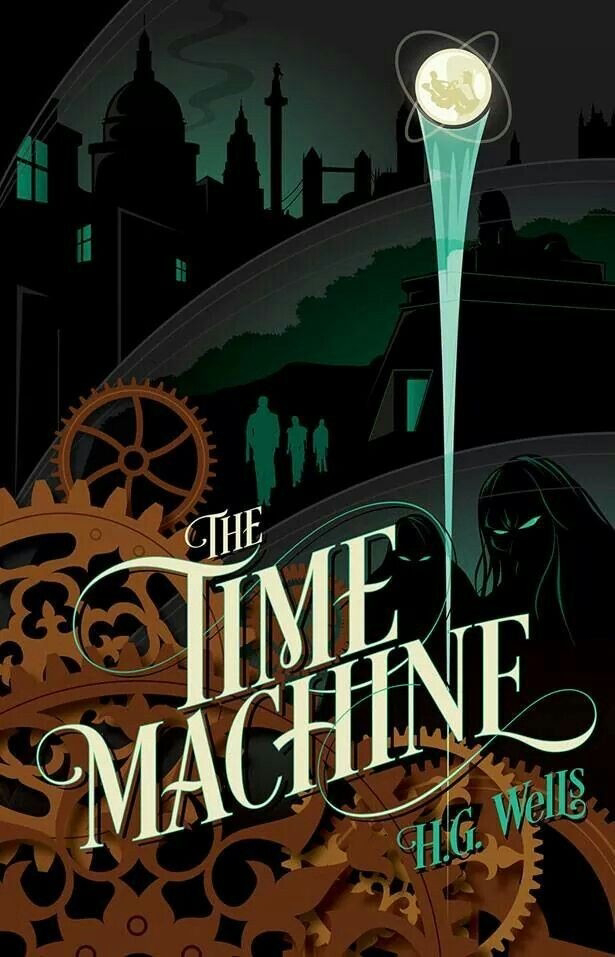
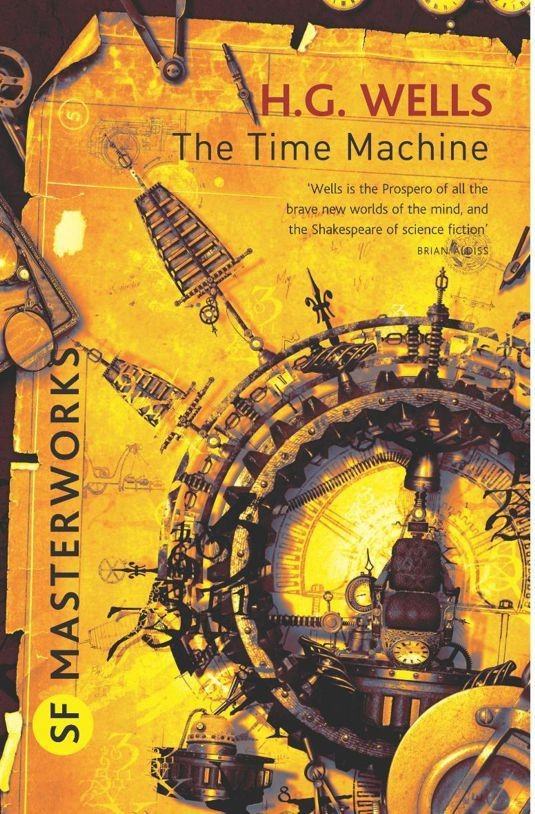
CRITICAL APPRECIATION OF "THE TIME MACHINE" BY H.G.WELLS

CRITICAL APPRECIATION OF "THE TIME MACHINE" BY H.G.WELLS
Here's a critical appreciation of H.G. Wells' "The Time Machine" :

**Introduction:**
- "The Time Machine" by H.G. Wells is a seminal work of science fiction published in 1895.
- It's regarded as one of the earliest examples of time travel literature and has had a profound impact on the genre.

**1. Innovation in Science Fiction:**
- "The Time Machine" is notable for its groundbreaking concept of time travel, which was a relatively new idea in the late 19th century.
- Wells introduced the concept of a machine that could transport a person through time, laying the foundation for many future time travel stories.

**2. Exploration of Time as a Theme:**
- The novel's primary theme is time itself, and it delves deep into the philosophical implications of time travel.
- Wells raises questions about the nature of time, its linearity, and how it affects human existence.

**3. Social Commentary:**
- The novel serves as a platform for social commentary, particularly on class divisions and societal inequalities in Victorian England.
- Wells uses the distant future and the contrasting societies of the Eloi and Morlocks to critique the societal structure of his own time.

**4. Character Development:**
- Although the characters in the novel are not highly detailed, the protagonist, the Time Traveller, undergoes significant development.
- His journey through time and the challenges he faces force him to adapt and change, making him a relatable and evolving character.

**5. Imaginative World-Building:**
- Wells' ability to create imaginative and believable future worlds is a standout feature of the novel.
- The descriptions of the Eloi and Morlocks and their respective environments are vivid and engaging, immersing the reader in these distinct societies.

**6. Symbolism of the Eloi and Morlocks:**
- The Eloi and Morlocks are symbolic representations of different aspects of humanity and societal evolution.
- The Eloi represent a complacent, privileged upper class, while the Morlocks symbolize the oppressed, laboring class.
- This symbolism allows for a deeper exploration of social issues.

**7. Suspenseful Plot:**
- The novel's plot is engaging and suspenseful, as the Time Traveller faces various challenges and mysteries during his journeys through time.
- Readers are kept on the edge of their seats as they follow his adventures and discoveries.

**8. Philosophical Depth:**
- "The Time Machine" goes beyond being a simple adventure story; it explores philosophical concepts related to time, fate, and the human condition.
- The Time Traveller's encounters with the future civilizations lead to profound reflections on the nature of humanity and its potential outcomes.
**9. Influence on the Genre:**
- H.G. Wells' work, including "The Time Machine," has had a lasting impact on science fiction literature.
- His imaginative storytelling and thought-provoking themes paved the way for many other authors to explore the possibilities of the genre.

**10. Themes of Isolation and Loneliness:**
- The Time Traveller's experiences in the distant future also touch on themes of isolation and loneliness.
- He is cut off from his own time and finds it challenging to communicate with the Eloi and Morlocks, highlighting the human need for connection.

**11. Time Travel Paradoxes:**
- Wells introduces the concept of time travel paradoxes, such as the potential to change the past or the existence of multiple timelines.
- These paradoxes add complexity to the narrative and invite readers to consider the implications of time travel.

**12. Ending Ambiguity:**
- The novel concludes with a degree of ambiguity regarding the Time Traveller's fate and his final journey.
- This ambiguity leaves room for interpretation and discussion among readers, making the ending thought-provoking.

**Conclusion:**
H.G. Wells' "The Time Machine" is a masterpiece of science fiction that has endured for over a century. It is celebrated for its innovative concept, deep philosophical exploration of time, social commentary, character development, imaginative world-building, and influence on the genre. Its enduring popularity and continued relevance in discussions about time, society, and the human condition attest to its status as a classic of science fiction literature.

The Main Message Of The Time Machine By H.G. Wells

MAIN MESSAGE OF THE TIME MACHINE BY H.G.WELLS
The main messages and themes in H.G. Wells' "The Time Machine" in point form, within 700 words:

**Introduction:**
- "The Time Machine" is a classic science fiction novel by H.G. Wells, published in 1895.
- The novel explores several thought-provoking themes and messages, making it a significant work in the genre.

**1. The Inevitability of Change:**
- One of the central messages of the novel is the inevitability of change and the passage of time.
- The Time Traveller invents a machine that allows him to travel through time, highlighting how time is a force that cannot be stopped or controlled.
- The world he encounters in the distant future has undergone profound transformations, serving as a reminder that everything is subject to change.

**2. The Fragility of Civilization:**
- "The Time Machine" emphasizes the fragile nature of human civilization.
- The Eloi and Morlocks represent two potential outcomes of human society: one that has achieved technological advancement but has become weak and decadent (Eloi), and another that has regressed to brutality (Morlocks).
- This portrayal serves as a cautionary tale, warning that even the most advanced civilizations can crumble if not nurtured and protected.

**3. Social and Economic Inequality:**
- The novel addresses the theme of social and economic inequality through the stark contrast between the Eloi and the Morlocks.
- The Eloi live a life of leisure and privilege, while the Morlocks perform all the labor and live in harsh conditions.
- H.G. Wells critiques the class divide in Victorian society and suggests that such inequalities could persist or worsen in the future.

**4. The Dark Side of Progress:**
- "The Time Machine" raises questions about the potential negative consequences of unchecked technological progress.
- The Eloi's comfortable existence is made possible by advanced technology, but it has also made them complacent and vulnerable.
- The Morlocks, on the other hand, are a product of this progress, having evolved in response to the changing environment. They represent the unintended consequences of scientific and industrial advancement.

**5. The Duality of Human Nature:**
- The novel explores the duality of human nature, as seen in the contrasting behavior of the Eloi and the Morlocks.
- While the Eloi appear gentle and docile, they are ultimately weak and passive, unable to defend themselves.
- The Morlocks, though brutal and predatory, are still descendants of humanity, highlighting the potential for darkness within us all.

**6. Survival and Adaptation:**
- Survival and adaptation are key themes in "The Time Machine."
- The Time Traveller's struggle to survive in the future world becomes a central narrative as he faces the challenges posed by the Eloi and Morlocks.
- His ingenuity and resourcefulness are put to the test, highlighting the human drive to adapt and overcome adversity.

**7. Reflection on Progress and Regression:**
- The novel invites readers to reflect on the nature of progress and regression.
- The Eloi's society, despite its technological advancements, has regressed morally and intellectually.
- The Morlocks, while adapted to their environment, have regressed in terms of empathy and compassion.
- Wells prompts readers to consider what constitutes true progress in society.

**8. Time as a Metaphor:**
- Time serves as a metaphor throughout the novel, representing change, decay, and the unknown.
- The Time Traveller's journey through time mirrors humanity's journey through history, with its uncertainties and surprises.
- The novel encourages readers to contemplate the mysteries of time and its impact on individuals and societies.

**Conclusion:**
H.G. Wells' "The Time Machine" is a rich and layered work of science fiction that conveys several important messages and themes. It explores the inevitability of change, the fragility of civilization, social and economic inequality, the dark side of progress, the duality of human nature, survival, and adaptation, as well as reflections on progress and regression. Through the narrative of time travel, Wells prompts readers to ponder the complexities of human existence and the ever-shifting nature of the world around us.

The Elois And Marlocks In The Time Machine By H.G. Wells

THE ELOIS AND MARLOCKS IN THE TIME MACHINE BY H.G. WELLS
 Eloise and the Morlocks in H.G. Wells' "The Time Machine":

**Introduction:**
"The Time Machine" by H.G. Wells is a classic science fiction novel published in 1895. It tells the story of an unnamed Time Traveller who invents a machine that allows him to travel through time. During his adventures, he encounters two distinct future civilizations: the Eloi and the Morlocks. These two groups represent the extreme ends of societal evolution and offer a commentary on the consequences of class disparity and the potential future of humanity.

**1. The Eloi:**
- The Eloi are a peaceful and childlike race that the Time Traveller encounters in the distant future.
- They live above ground in idyllic conditions, enjoying a carefree existence without any toil or hard work.
- Eloise represent the result of a highly advanced and technological society where all the needs of individuals are met effortlessly.
- The Time Traveller initially sees the Eloi as a utopian society where everything is provided for them, and conflict seems absent.

**2. The Morlocks:**
- The Morlocks are a subterranean and subhuman race that exists in stark contrast to the Eloi.
- They live underground and have evolved into a more sinister and brutal form of existence.
- Morlocks have become the laborers and workers, doing all the necessary tasks that keep their society functioning.
- They are adapted to the darkness and have a predatory nature. Their appearance is menacing, with pale skin and large, glowing eyes.
- The Morlocks represent the consequences of societal division and class struggle, as they are essentially the labor class exploited by the Eloi.

**3. Class Divide:**
- The division between the Eloi and the Morlocks highlights the stark contrast between the privileged upper class and the oppressed working class.
- The Eloi live in luxury and ease, while the Morlocks toil underground, performing all the labor required for the Eloi's comfortable existence.
- Wells uses this division to comment on the social and economic inequalities of his time, suggesting that such disparities may persist or worsen in the distant future.

**4. Evolutionary Divergence:**
- The Eloi and the Morlocks are the result of human evolution over thousands of years, driven by their respective environments.
- The Eloi's lack of challenges and the absence of natural selection have made them weak and fragile.
- In contrast, the Morlocks' harsh underground existence has shaped them into a more robust and adaptable species.
- This evolutionary divergence raises questions about the consequences of environmental pressures on the future of humanity.

**5. The Time Traveller's Observations:**
- The Time Traveller's initial fascination with the Eloi turns into horror and realization as he discovers that the Morlocks prey on the Eloi.
- He realizes that the Morlocks, while physically different, are still descendants of the same human race, and their brutal behavior is a reflection of a darker side of human nature.
- The Eloi and Morlocks represent two potential outcomes for humanity: one where technology and comfort lead to weakness, and another where hardship and struggle lead to brutality.
**6. The Time Traveller's Escape:**
- The Time Traveller's encounters with the Eloi and Morlocks become a fight for his survival as he tries to return to his own time.
- He discovers that the Morlocks have taken his time machine, and he must confront the brutal reality of the future world he has entered.
- His struggle to retrieve the time machine and escape serves as a climactic moment in the story, highlighting the tension between the two races.

**Conclusion:**
In "The Time Machine," Eloise and the Morlocks symbolize the extreme outcomes of societal evolution and the consequences of class division. H.G. Wells uses these two races to explore themes of inequality, the potential consequences of technology, and the darker aspects of human nature. The novel serves as a cautionary tale about the direction society might take if such divisions and inequalities persist.

"Time Machine" By H.G. Wells As A Science Fiction

H.G. Wells - Time Machine As A Science Fiction 
"The Time Machine" by H.G. Wells is a classic science fiction novel that explores the concept of time travel

1. **Author and Context**:
   - "The Time Machine" was written by H.G. Wells, a prolific writer known as one of the pioneers of science fiction.
   - The novel was first published in 1895, during a period of significant scientific and technological advancements, including the development of theories related to time and space.

2. **Protagonist - The Time Traveler**:
   - The story is narrated from the perspective of an unnamed narrator who recounts the Time Traveler's experiences.
   - The Time Traveler is an eccentric inventor and scientist who creates a machine capable of traveling through time.

3. **The Time Machine**:
   - The central element of the story is the Time Machine itself, a vehicle that allows its operator to journey through time.
   - It is a small, elegant, and intricate device built by the Time Traveler.

4. **Time Travel Concept**:
   - The Time Machine enables the Time Traveler to venture into the distant future.
   - This concept of time travel was groundbreaking in the late 19th century and laid the foundation for many subsequent time travel stories.

5. **Eloi and Morlocks**:
   - In the year 802,701 AD, the Time Traveler encounters two distinct races: the Eloi and the Morlocks.
   - The Eloi are small, childlike, and peaceful. They live above ground and have no need for work or sustenance.
   - The Morlocks are subterranean creatures, strong and sinister, who operate in darkness and are responsible for maintaining the machinery of the Eloi's idyllic world.
6. **Social Commentary**:
   - Wells uses the Eloi and Morlocks to comment on class struggle and the consequences of social inequality.
   - The Eloi represent the upper class, while the Morlocks symbolize the oppressed working class.

7. **Dystopian Future**:
   - The future that the Time Traveler visits is not the utopia he expected. Instead, it is a dystopian world where the Eloi live in fear of the Morlocks.
   - The novel raises questions about the potential consequences of unchecked technological progress.

8. **Time as the Fourth Dimension**:
   - Wells introduced the idea of time as the fourth dimension in this novel, a concept that has since become a fundamental aspect of time travel fiction.
   - The Time Traveler's machine moves through time just as a car moves through space.

9. **The Evolution of Humanity**:
   - The novel explores the far future and suggests that humanity may evolve into separate species, the Eloi and the Morlocks, due to social and environmental factors.

10. **The Time Traveler's Adventures**:
    - The Time Traveler embarks on multiple journeys to different time periods, witnessing the Earth's changing landscapes and the eventual extinction of life on the planet.

11. **Return to the Present**:
    - The Time Traveler returns to the present time and shares his incredible story with a group of skeptical friends, who doubt the validity of his experiences.
12. **Open-Ended Conclusion**:
    - The novel ends with the Time Traveler disappearing on another journey, leaving the narrative open-ended. His ultimate fate remains a mystery.

13. **Legacy and Influence**:
    - "The Time Machine" has had a profound impact on the science fiction genre and time travel literature.
    - It has been adapted into numerous films, television shows, and other media.

14. **Themes**:
    - The novel explores themes such as the nature of time, the consequences of scientific discovery, the evolution of humanity, and the potential pitfalls of societal division.

15. **Imagination and Innovation**:
    - H.G. Wells' imaginative storytelling and innovative concepts in "The Time Machine" continue to captivate readers and inspire writers and thinkers to explore the boundaries of time and space.

In summary, "The Time Machine" by H.G. Wells is a seminal work in science fiction literature that introduced the concept of time travel and delved into social commentary, the consequences of unchecked technological progress, and the evolution of humanity. It remains a thought-provoking and influential work in the realm of speculative fiction.

Summary Of "The Discovery of India" by Jawaharlal Nehru

Summary Of "The Discovery of India" by Jawaharlal Nehru  Summary of "The Discovery of India" by Jawaharlal N...